The Building Is Not the Neighborhood: What Abidjan Courtyards Teach American Renters
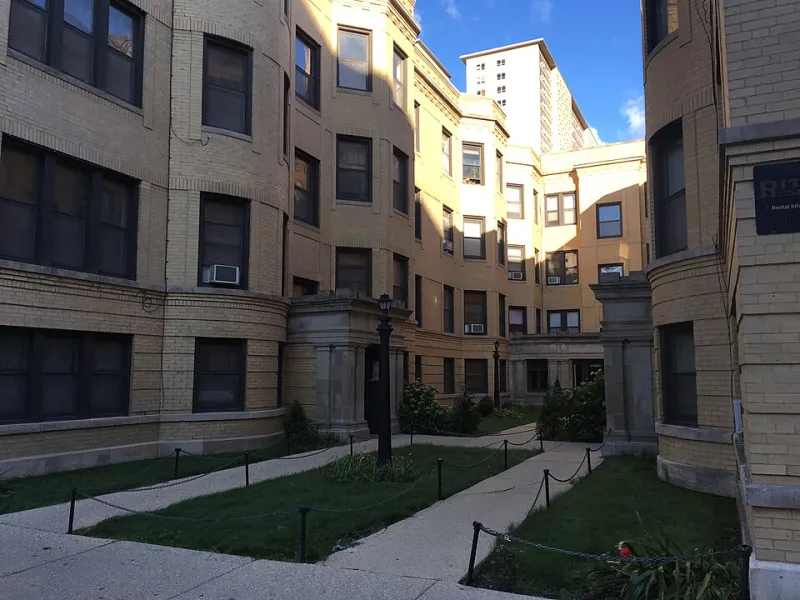
Photo: Eric Fischer, CC BY 2.0, via Wikimedia Commons
In a lot of American apartment buildings, you can live ten feet from someone for two years and still know them only as the person whose package got left by the mailroom. The building is shared. The life is not. Abidjan’s shared courtyards run on a different logic. They are not fancy amenities or branded community spaces. They are working social infrastructure — the place where laundry lines, borrowed chairs, quick greetings, and small favors turn a stack of rented rooms into something closer to a mini-neighborhood.
That setup is not perfect. It can be noisy. It can be too close. It can produce the kind of gossip that travels faster than a gbaka at rush hour. But it also makes casual contact unavoidable in the best way. For US renters and city planners, that is the lesson worth stealing: neighborliness is not a program you launch. It is a habit you make easy.
The Courtyard Is a Room Without a Door
In many Abidjan compounds, the courtyard is where the day leaks out of the apartment. Someone is rinsing rice. Someone is arguing with a cousin on speakerphone. A child is doing homework on a plastic chair. A neighbor is borrowing a bucket and promising to return it before dinner. None of this is scheduled. That is the point.
The courtyard works because it sits directly between private life and public life. It is not the street, where you are fully exposed. It is not the apartment, where you are fully closed off. It is a soft middle ground. You can say hello in slippers. You can retreat inside. You can spend five minutes or fifty.
US apartment buildings often skip that middle ground. The hallways are for walking. The lobby is for waiting. The package room is for scanning a code. Even shared outdoor spaces can feel like stage sets — pleasant to look at, awkward to use. The Abidjan courtyard suggests a different design goal: make the in-between space feel like a room people actually want to stand in.
Neighborliness Needs Low-Stakes Repetition
American apartment culture tends to treat community as an event. There is a building barbecue. A holiday mixer. A resident app with a message board that goes quiet after two weeks. These things are fine, but they ask people to opt in before they have any real relationship. It is a lot of pressure for a Tuesday night.
Abidjan courtyards build neighborliness through repetition instead. You see the same faces while hanging laundry. You hear the same radio station. You ask the same person for a match, a chair, a little help carrying something. The interactions are tiny, but they add up. Trust gets built in small change, not big gestures.
That is a useful correction for US renters. You do not need to become best friends with everyone on your floor. You need enough small, repeated contact that people become familiar. Familiarity is the first door. Friendliness can walk through later.
The Borrowed Chair Economy
In Abidjan, the courtyard often runs on a quiet lending network. Chairs move. Buckets move. A pot goes next door. Someone watches a child for ten minutes. Someone else keeps an eye on a delivery. These are not formal arrangements. They are everyday exchanges that say, without saying it, we are in this together.
US renters do not need to recreate the exact same system. Liability rules, lease agreements, and building management can make shared stuff complicated. But the principle travels. Small favors are social glue. Holding a door. Accepting a package. Watering a plant. Saving a parking spot for five minutes. These are low-risk ways to signal that you are not just occupying space — you are participating in it.
The borrowed chair economy also reveals something city planners should notice: shared spaces need permission to be used casually. If every bench looks like a photo op and every common area has a list of rules taped to the wall, people will treat it like a showroom. Give them shade, seating, and a reason to linger, and they will do the rest.
What US Renters Can Actually Do
Most US renters cannot knock down walls or redesign their building. But they can work with the courtyard logic that already exists. Sit outside sometimes. Learn two names. Use the shared grill or the laundry room like a place, not a pit stop. Put a chair near the mailroom if management allows it. Start with a nod. Graduate to a hello.
The bigger lesson is for the people who design and manage rental housing. Shared spaces should be on the path people already take, not tucked behind a locked door. Benches should face each other. Common areas should be visible from windows. Buildings should make brief contact easy and longer contact optional. That is how you get neighborliness without forcing intimacy.
The Privacy Balance
It would be easy to romanticize Abidjan’s courtyards and pretend they are all warm, effortless community. They are not. Shared space can be intense. People know your business. Boundaries have to be negotiated. Privacy is not a given.
That is exactly why the lesson for US renters is not “live like an Abidjan courtyard.” It is “build in more chances for casual contact, while keeping the exits open.” The best courtyard life is not forced togetherness. It is optional togetherness that happens often enough to matter. You can greet a neighbor and still close your door. You can borrow a chair and still keep your business to yourself.
In 2026, American rental life is often transient and screen-mediated. We buzz people in through an app. We monitor hallways through cameras. We text the group chat instead of knocking. Abidjan’s courtyards are a reminder that a neighborhood is not a amenity list. It is a pattern of small encounters. The building is not the neighborhood. The people are — and they need a place to run into each other.