Two Hundred White Chairs by Sunrise: The Abidjan Hustle Behind Every Big Saturday
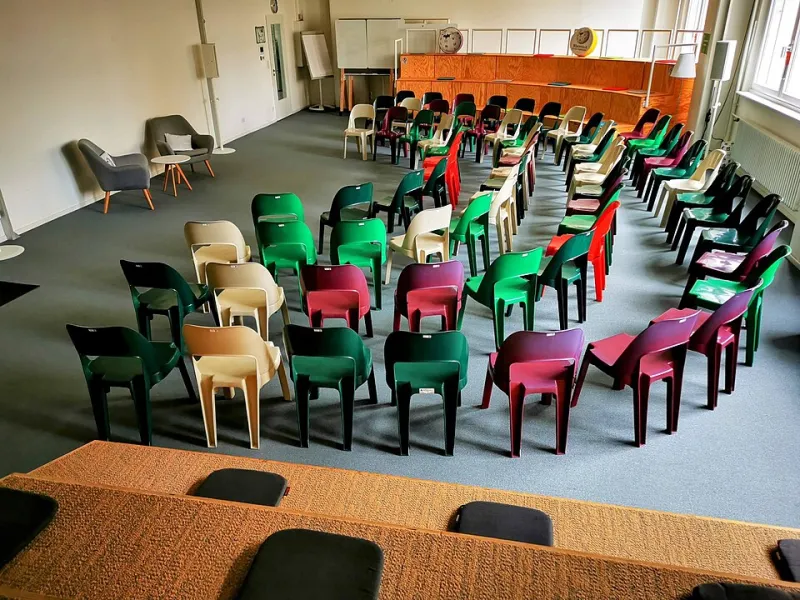
Photo: Louisa Meyer, CC BY 4.0, via Wikimedia Commons
On a Saturday morning in Abidjan, the party does not begin with the couple, the DJ, or the pastor. It begins with a truck full of white plastic chairs and a man with a notebook, a phone that will not stop ringing, and a crew that knows how to stack 200 seats without scratching the paint.
That is the chair economy: a low-glamour, high-reliability business tucked into neighborhoods like Yopougon, Abobo, Treichville, and Marcory. Renters supply the folding tables, monobloc chairs, tablecloths, coolers, and sometimes the tent that turn a courtyard, a church yard, or a dusty lot into a celebration. Weddings, funerals, baptisms, political rallies, church anniversaries, and family reunions all depend on the same simple promise: the seats will be there before the guests.
For anyone in the US who has ever rented folding chairs for a backyard wedding or watched a side hustle turn into a small business, Abidjan's chair men and women offer a master class in logistics, trust, and knowing exactly what Saturday morning requires.
The 5 A.M. Inventory
The day starts early, long before the first guest arrives. A good renter does not guess. They count. White chairs for the wedding. Blue or red for a funeral. Larger chairs for elders. Tables for the caterer. A separate stack for the choir. Maybe a few benches for the overflow. The inventory is not just furniture; it is a seating plan waiting to happen.
Many operators keep their stock in a locked courtyard, a garage, or a rented depot. Chairs are stacked in columns, inspected for cracks, wiped down, and loaded by hand. In a city where heat and rain can ruin a schedule, the crew works fast. A broken leg on a plastic chair is not a small problem. It is a seating crisis, a safety issue, and a hit to the renter's reputation.
The best operators know their stock the way a bartender knows a back bar. They can tell you how many chairs are already promised for Friday, how many are coming back from a funeral in Bingerville, and which batch needs new pins or a fresh wash. That kind of memory is an asset. In the US, party rental companies use software and barcode scans. In Abidjan, plenty of renters use a notebook, a WhatsApp thread, and a brain that has been trained by years of Saturdays.
Bargaining Is Part of the Service
The price is rarely just the price. A rental quote may include delivery, setup, pickup, and a deposit. Families negotiate. Cousins compare prices. A church committee asks for a discount and promises future business. The renter weighs fuel, crew wages, truck rental, and the risk of a late return. The conversation is friendly but serious.
Trust holds the deal together. Many customers book by phone or in person, pay part of the money up front, and expect the chairs to arrive on time. The renter, in turn, relies on a network of regular clients who call back for every family event. That repeat business is the real marketing budget. No billboard needed. If you handled Auntie's funeral well, you will get the wedding.
There is a lesson here for US side-hustle watchers who think every business needs an app. The chair business is not built on disruption. It is built on dependability. The operator who answers the phone, confirms the count, and shows up when promised wins. The one who is cheaper but late does not last.
The Overnight Load-Out
The real drama happens the night before. Crews load trucks and carts, tie down stacks, and map the route. In dense neighborhoods, a big truck may not reach the door, so chairs move by hand truck, cart, or muscle. Rain is the enemy. A sudden downpour can turn a loading plan into a scramble. Security matters too. Chairs left in an open yard can disappear.
By sunrise, the setup crew is placing rows, leaving aisles, and adjusting the VIP section. The renter may not stay for the party. They have another delivery, another pickup, another family waiting. The job is a loop: load, deliver, arrange, return, count, repair, repeat.
That loop is why the business is harder than it looks. The chairs are cheap individually. The operation is not. Trucks, fuel, storage, labor, damaged stock, and missed sleep all eat into the margin. The renters who thrive are not just owners of chairs. They are dispatchers, mechanics, negotiators, and customer service reps.
The Color-Coded Seat Plan
In Abidjan, seating is social architecture. The front row is not random. Elders, officials, pastors, and close family have places. The choir may need a block. The catering team needs access. A political gathering may need a visible section for supporters. A funeral may require space for different family branches and delegations.
Renters learn to translate a family's wishes into rows. Some use color-coded chairs or tablecloths to mark sections. Others sketch the plan on paper or send a voice note. The goal is simple: nobody important should be left standing, and nobody should be seated in the wrong place.
US event planners know this as seating diplomacy. In Abidjan, it is part of the rental service. The chair man is not just delivering furniture. He is helping a family avoid embarrassment.
What US Party Planners Can Borrow
First, treat delivery and setup as part of the product. A cheap chair is not cheap if it arrives late. Second, confirm the count the day before. Families change plans. Guests arrive. A quick call can save a truck trip. Third, build a crew you can trust. The business runs on muscle and reliability, not a solo entrepreneur with a minivan.
Fourth, charge for the real work. Loading, unloading, setup, and pickup are labor. US side hustlers often underprice these steps. Fifth, create a simple damage policy. Chairs break. A clear rule protects the business and the customer. Sixth, reward repeat clients. In Abidjan, the family that rents chairs for a funeral may return for a wedding, a baptism, and a birthday. The lifetime value is in the relationship.
The Quiet Engine
The chair economy is not glamorous. It does not trend on social media. But it powers the moments that do. Every wedding photo with a full row of guests, every church anniversary, every political rally, every funeral where the community shows up, depends on someone who stayed up late counting plastic seats.
In Abidjan, the party starts with 200 chairs and a promise. The chair man cometh, and the city knows his number.