The Notice on the Pole: How Abidjan's Funeral Posters Turn Grief Into a Public Conversation
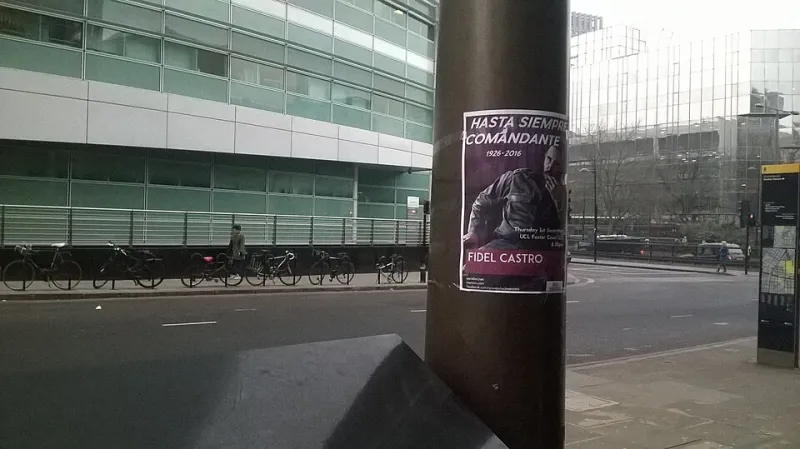
Photo: Christopher Hilton , CC BY-SA 2.0, via Wikimedia Commons
Walk through almost any Abidjan neighborhood and you will see them before you know what they are: sheets of paper, sometimes small and simple, sometimes large and glossy, taped to a shop shutter or pasted around a utility pole. They carry a face, a name, a set of dates, a church schedule, and a list of family members. These are funeral posters, and in Abidjan they do more than announce a service. They turn a private loss into a public fact that the street can read, discuss, and remember.
In the US, death often travels through quieter channels: an obituary link, a funeral home website, a card passed around an office, a post that disappears down a feed. Abidjan does not always do quiet. The city has a long habit of putting grief on the wall, and the wall becomes a kind of neighborhood archive—one that is updated, weathered, layered over, and read out loud by people who may never have met the person inside the frame.
A poster is a guest list and a map
Look closely at an Abidjan funeral poster and you are not just looking at a portrait. You are looking at a small information system. There is usually the full name, the dates of birth and death, the nickname or family name people actually used, the names of children and relatives, the church or mosque, the program of events, and sometimes a line of thanks to employers, neighbors, or associations.
The poster tells you where to go and who is expected. It tells you which family branch is hosting, which congregation is involved, and whether the ceremony is a wake, a mass, a burial, or a longer series of events. For a city where many people live at a distance from their home villages and extended families, that matters. A funeral can pull people across Abidjan and back to a hometown, and the poster works as a public map for all of it.
It also works as a social guest list. Seeing a poster on your own street tells you that someone nearby is in mourning, even if you did not know them well. In a big, fast city, that is a small but meaningful form of attention.
The design language: color, portrait, wording
Abidjan's funeral posters have a visual grammar, even if no one hands you a rulebook. Black and white are common, but so are deep reds, blues, and golds. The portrait is central. Sometimes the person is dressed formally; sometimes the image is a favorite photo that feels more like them than any official picture. The typography can be crowded or clean, homemade or professionally printed. The point is not minimalist restraint. The point is recognition.
Neighborhoods read the details. A poster with a church program and a long list of family names tells you something about the network behind the person. A poster with a nickname in bold tells you how the person was known in daily life. A poster with a photograph that looks like it was taken at a family event can make the notice feel less like an announcement and more like a last public appearance.
There is also the wording. The language is often formal, but it is not cold. Phrases of gratitude, invitations to pray, and acknowledgments of family and community appear alongside the schedule. The poster is doing two jobs at once: it is informing people and it is thanking them in advance for showing up.
Who pays, who prints, who glues
These notices are not free, and they are not magically produced by the city. Families often pay for them, sometimes with help from relatives, churches, associations, or close friends. Print shops and small design stalls do a steady trade in funeral notices, working from a photo, a list of names, and a set of instructions that may arrive in person or through a relative.
Then comes the distribution. Someone has to take the posters to the neighborhoods where the family is known, to the church, to the workplace, to the market, to the corners where people will actually look. That work is part of the ritual. It is not just advertising. It is a way of saying, this person existed here, and we are not going to let the street forget it.
The posters do not last forever. Rain curls the edges. Sun fades the ink. New notices get pasted over old ones. That layering is part of the texture of the city. A wall of funeral posters is not a permanent monument. It is a living bulletin board, always being edited by time and weather and the next family's need to announce.
Reading the street without looking away
For outsiders, the first reaction can be discomfort. In many US cities, grief is kept indoors or online, and public walls are reserved for ads, campaign signs, and lost-dog flyers. A funeral poster can feel startlingly direct. But that directness is the point. It refuses to pretend that loss is a private inconvenience.
Abidjan's posters also create a kind of neighborhood literacy. People learn to read the visual cues. They know which print shop does clean work, which church is hosting, which family is large, which nickname belongs to the man who sold bread on the corner. The poster becomes a conversation starter: Did you see the notice? Are you going? Do you know the family? In that sense, the poster is not only an announcement. It is a social object.
There is a lesson here for US cities, though it is not about copying a format. It is about refusing to make grief invisible. A public notice can be dignified without being stiff. It can be local without being exclusive. It can tell a neighborhood that someone mattered, and it can give people a small, concrete way to respond—show up, pray, cook, help, or simply acknowledge.
Abidjan's funeral posters are not perfect. They can be expensive, crowded, and hard to maintain. But they do something that many American death notices do not: they put loss on the street, in daylight, where the city has to see it. In a culture that often treats mourning as a private room, that is a radical kind of openness. The notice on the pole is a goodbye said out loud—and the neighborhood is invited to hear it.