The 90 Minutes That Divide Abidjan—and the Maquis That Put It Back Together
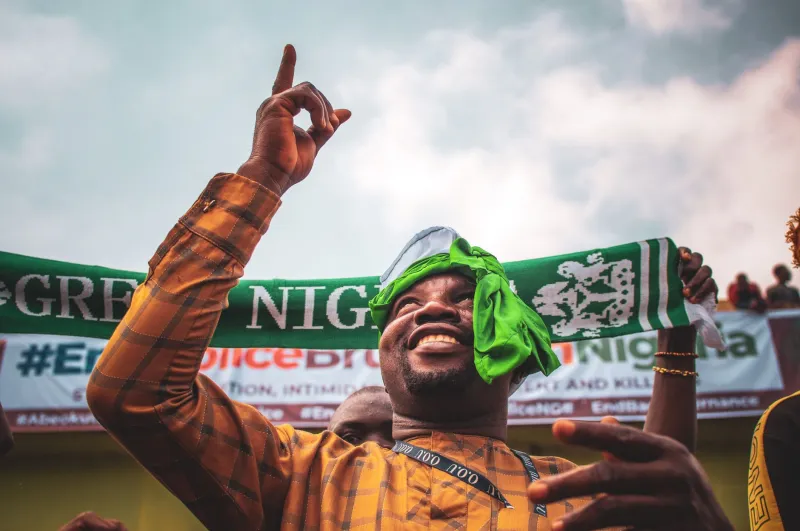
On derby day in Abidjan, the city does not exactly stop. It tightens. Taxis fill earlier. Maquis tables get claimed by mid-afternoon. Phones buzz with group-chat predictions. And somewhere between Adjamé and Treichville, between family kitchens and office arguments, the question lands: ASEC or Africa Sports?
I grew up watching US rivalries from a distance—Yankees versus Red Sox, Lakers versus Celtics, Ohio State versus Michigan. They are loud, tribal, and fun. But the ASEC Mimosas versus Africa Sports derby is different. It is not only a game between two clubs. It is a neighborhood argument, a family inheritance, and a city-wide conversation that starts before kickoff and refuses to end after the final whistle.
Picking a Side Is a Family Inheritance
You do not usually choose your club after reading a brochure. You inherit it. A father's scarf, an uncle's stories, a cousin who insists the other side has been lucky for twenty years—that is how the loyalty gets handed down. ASEC Mimosas, the yellow-and-black side, and Africa Sports, the red-and-green Eagles, carry different myths about themselves and different versions of Abidjan pride.
In the US, we often treat fandom as a consumer choice. In Abidjan, it feels more like a family name. You can change your jacket. You do not casually change your derby allegiance.
Before Kickoff, the Maquis Does the Talking
Maquis are the open-air restaurants and hangouts that anchor so much of Abidjan's social life. On derby day, they become debate halls. Plates of attiéké, alloco, braised chicken, and grilled fish move across tables while someone explains exactly why the referee will ruin everything. A stranger at the next table becomes a temporary ally or a friendly enemy within minutes.
US tailgates are the closest comparison, but they usually happen in parking lots around stadiums. Abidjan's pre-game happens in the neighborhood, under corrugated metal or palm thatch, with the match on a television and the argument already at full volume. The maquis is where the derby becomes community theater.
The Match Itself Is Almost Secondary
Ninety minutes of tension. The streets go quiet in patches. Then a goal goes in and you hear it before you see it—a wave of noise rolling across blocks. In the US, we call it a rivalry game. In Abidjan, it is a civic appointment.
The football is often cautious, tense, and more about pride than beauty. That is part of the ritual. The derby is not just a test of skill. It is a test of nerve, memory, and neighborhood reputation.
After the Whistle, the City Reopens Its Mouths
Winning fans parade. Losing fans analyze. Everyone becomes a tactical expert. The derby never really ends; it moves to WhatsApp, to the office, to the maquis the next day. A defender who had a bad afternoon will be discussed like a public official. A missed chance will be replayed for weeks.
That post-match debate culture is the best part. It gives the city a shared language. You do not need to know the players' full names to understand the argument. You just need a side, a seat, and an opinion.
What US Rivalries Can Learn From Abidjan
US sports rivalries are great at spectacle. Abidjan's derby is great at belonging. The maquis is a third space—not home, not work, not the stadium—where people of different incomes and neighborhoods sit close together and argue about the same ninety minutes. That is harder to build than a pre-game show.
A rivalry can be fierce without being destructive. The derby channels neighborhood pride into noise, food, and debate. US cities could learn from that: give the rivalry a place to breathe outside the arena, let the argument happen over a table, and make room for the other side to sit down afterward.
In 2026, the derby still matters because it is not only about who wins. It is about who belongs. When the next one comes around, I will be at a maquis, plate in front of me, phone face down, ready to argue. The score will fade. The argument stays.