The Gbaka Code: What Abidjan's Painted Minibuses Teach a City About Riding Together
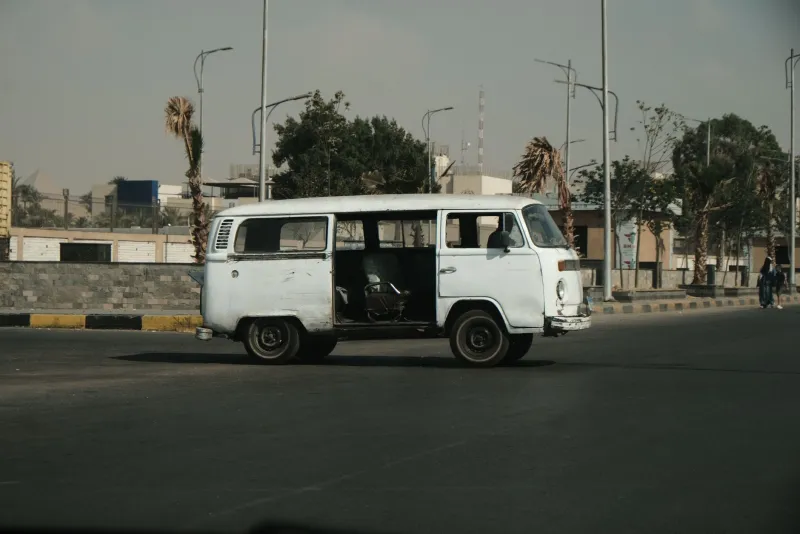
In Abidjan, a gbaka is never just a van. It is a rolling argument, a mobile jukebox, a painted billboard, and a crash course in reading a room that happens to be moving. If you have ridden a subway in New York or a bus in Los Angeles, you know the basic deal: pay, squeeze in, avoid eye contact, get off. The gbaka runs a different social operating system. It asks passengers to negotiate space out loud, laugh at the squeeze, and trust a conductor who is basically a human app with a sense of humor.
That is the part worth studying. Not because every US city should import Abidjan's informal transit model, and not because the chaos is charming. It is not always charming. It is hot, cramped, unpredictable, and sometimes unsafe. But the gbaka reveals something US commuters often miss: public space is not a pre-built container. It is something people make, minute by minute, through small codes and shared improvisation.
The Paint Job Is the Point
US buses and trains usually wear ads. A gbaka wears a personality. The back windows and side panels carry hand-painted slogans, jokes, football loyalties, religious phrases, advice, and sayings that range from the sincere to the very unserious. The paint is not corporate branding. It is local authorship. It tells you that this vehicle belongs to a neighborhood, a crew, a mood.
That matters. When transit feels anonymous, riders treat it like a waiting room. When it feels authored, even lightly, people act more like they are in a shared place. US cities spend a lot of money trying to make stations feel safer and more welcoming. Some of that work could start with letting local artists, riders, and drivers put a human voice on the vehicle, not just another ad for a streaming service.
The Conductor Is a Human App
The gbaka conductor hangs out the side door, calls destinations, taps the roof, whistles, waves, and reads the street in real time. He is part dispatcher, part bouncer, part hype man. The call-outs are not just information. They are performance. They tell you the van is alive, the route is moving, and somebody is paying attention.
US transit apps are useful, but they are also very good at removing people from the process. The gbaka suggests a correction: information can be social. A station ambassador who actually knows the neighborhood, a driver who announces the stop with a little personality, a posted route map that sounds like it was written by a human, these are small moves that make a system feel less like a machine and more like a city.
The Seating Chart Nobody Printed
A gbaka is cramped, but it is not random. There are codes. You pass money forward. You tap the shoulder of the person ahead of you. You make room in ways that are not explained but are understood. Regulars know where to sit, when to stand, how to hand off fare, and how to fold themselves into a space that looks impossible.
This is the quiet genius of informal transit. It creates belonging without a formal welcome. Nobody hands you a rulebook. You learn by watching, and the watching itself makes you part of the group. In many US public spaces, the opposite happens: we pretend not to notice each other, and that avoidance becomes the rule. The gbaka does not ask for a group hug. It asks for a small, practical acknowledgment: you are in this together for the next fifteen minutes.
The Soundtrack Does the Social Work
Music is part of the ride. Sometimes it comes from the radio, sometimes from a phone, sometimes from a speaker that has no business being that loud. The sound is negotiated. Someone turns it up. Someone else makes a face. Someone laughs. The ride becomes a temporary event rather than dead time between destinations.
US commuters have largely privatized sound. Headphones are a shield, and often a good one. But the gbaka reminds us that shared sound can turn strangers into a temporary cohort, if it is handled with a little restraint. The lesson is not to blast music on every bus. It is to design for moments of shared atmosphere, not only silence or advertising.
Humor Is Infrastructure
The gbaka runs on banter. People joke about the squeeze, the heat, the stop-and-go. The humor is not decoration. It is a pressure valve. It lets strangers acknowledge a difficult situation without turning it into a confrontation. That is a skill US cities could use more of, especially on transit, where small irritations can escalate fast.
But here is the honest part: do not romanticize the chaos. The same informal system that produces humor also produces long waits, dangerous driving, harassment risk, and unreliable service. The gbaka code is not a reason to abandon formal transit planning. It is a reminder that efficiency is not the only thing that makes a system work. Dignity, humor, and local knowledge matter too.
What US Cities Can Actually Borrow
You do not need to copy the gbaka to learn from it. Let transit have a local voice. Train station staff to improvise, not just recite. Create small rituals of acknowledgment. Protect space for shared sound and shared humor. Keep the safety and accessibility standards that informal systems often lack. The goal is not to make a US bus feel like a gbaka. The goal is to make public space feel like it belongs to the people using it.
Abidjan's minibuses are a masterclass in that kind of belonging. They are loud, painted, crowded, and imperfect. They are also a daily reminder that a city is not made by its infrastructure alone. It is made by the small codes people invent when they have to share a ride.