The Screen Is the Fire: Abidjan’s Sidewalk Football Rooms and the Case Against the Sports Bar
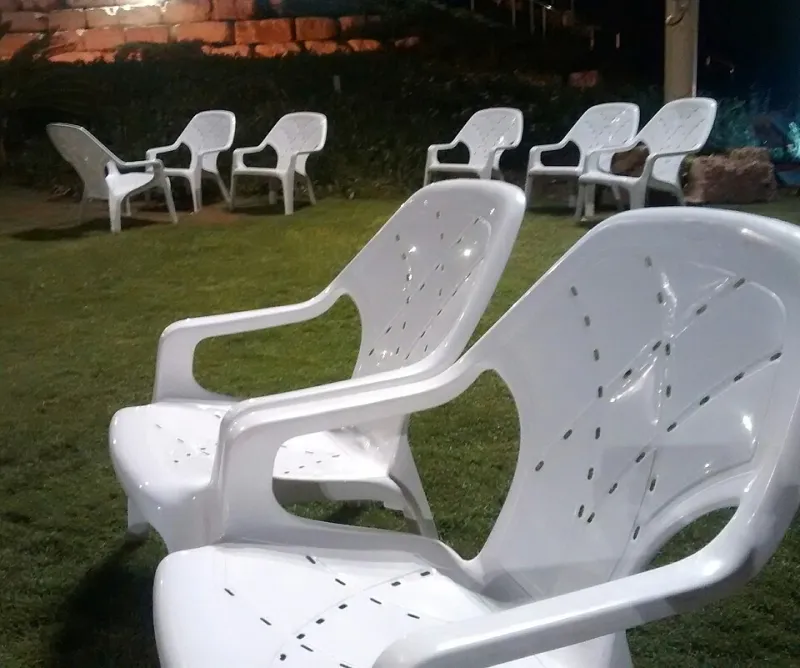
Photo: טבעת-זרם, CC BY-SA 4.0, via Wikimedia Commons
On a Champions League night in Abidjan, the first sign that something big is happening is not a flag, a banner, or a line outside a door. It’s a television, usually an older one, angled toward the street from the mouth of a corner shop. A extension cord snakes out behind it, over a threshold, across a courtyard, into a neighbor’s outlet. Then come the chairs—white plastic, blue plastic, a bench that was somebody’s dining table an hour earlier. By kickoff, the sidewalk has become a room.
For American readers, the easy comparison is a sports bar. But the comparison only goes so far. A sports bar is built to sell you the game. The corner TV in Abidjan is built to let the game happen to a neighborhood. That difference sounds small. It isn’t.
The TV Is Not the Main Character
In a US sports bar, the screens are everywhere. There’s one above the bar, four in the corner, a projector on the wall, maybe a bank of TVs showing five matches at once. The effect is abundance. You can look anywhere and find a game. But abundance has a way of making attention optional.
In Abidjan’s informal viewing spots, there is often one screen. Maybe two. The picture is not always crisp. The sound may be turned up too high for the room and too low for the people at the back. Nobody is handing out menus. Nobody is checking your tab. And because there is only one screen, everyone is more or less watching the same thing.
That single screen changes the social physics. When the striker breaks away, the whole corner leans at once. When the referee makes a questionable call, the complaint is collective, not private. The television is not the main character. The room is. The screen just gives the room a reason to exist for ninety minutes.
Kickoff Starts Before Kickoff
By November 2026, the pattern is familiar enough to feel like choreography. Someone sweeps the pavement. Someone else tests the extension cord. A shopkeeper adjusts the antenna or the satellite box. A teenager is sent to borrow a second chair. The neighbor whose outlet is being used leans out to say the connection is fine, but don’t touch the fridge.
This is the part a US sports bar cannot replicate with a reservation system. In American cities, watching a big match often means planning: booking a table, checking the cover charge, arriving early enough to get a good sightline, ordering enough to justify the seat. In Abidjan, the preparation is social rather than commercial. The chairs appear because people expect other people. The cord gets run because someone has agreed to share power. The space opens because the neighborhood has decided it is a football night.
That doesn’t mean it’s effortless. It means the effort is visible and shared. You can see the infrastructure of belonging: a plug, a cable, a chair, a doorway. In US terms, it’s less like a bar and more like a block party that happens to have a match on.
The Commentary You Didn’t Pay For
One of the great pleasures of the Abidjan corner TV is the commentary. Not the broadcast commentary—the room’s commentary. The defender is sleeping. The referee has a meeting to attend. The goalkeeper bought new gloves and forgot how to use them. Some of the loudest analysts may not be watching every minute. They drift in and out. They catch a replay. They ask what happened. They offer a verdict anyway.
In a sports bar, this kind of talk exists too, but it’s usually confined to your group. You talk to the people at your table. You might high-five a stranger after a goal, but the interaction is brief and bracketed. The Abidjan viewing spot is more porous. People stand, sit, lean, leave, come back. Kids perch on walls. Vendors pass through with peanuts or water. An elder who has no interest in the match sits at the edge because the corner is where the evening is.
The result is a room that is not only for fans. It is for neighbors. That is a different kind of public space, and it is harder to package.
What US Sports Bars Get Wrong
This is not an argument that sports bars are bad. They solve a real problem: people want to watch a game with strangers in a place that is warm, loud, and licensed. A good sports bar can feel electric. A packed room after a late winner can be genuinely moving.
But a packed room is not always a shared room. A sports bar often sells privacy in public: your table, your tab, your group, your screen angle. The strangers are part of the atmosphere, not necessarily part of the experience. You can be shoulder to shoulder with fifty people and still speak only to the three you came with.
The Abidjan corner TV works the other way. It has almost no privacy. It has very little comfort. It can be hot, crowded, glare-prone, and interrupted by a power cut or a neighbor’s request. But it has a low threshold for participation. You don’t need to buy a drink to belong for a minute. You don’t need to know the whole room. You just need to stand there and react with everyone else.
The Extension Cord Is the Whole Thesis
If you want to understand the difference, look at the extension cord. It is a small, fragile piece of infrastructure that makes a public viewing possible. It crosses property lines. It depends on trust. It is not designed for spectacle. It is designed for access.
US cities have public screens and watch parties too, but they often require permits, sponsors, insurance, and a fenced-off area. Abidjan’s sidewalk viewing rooms are informal, imperfect, and sometimes illegal in the small ways that informal things often are. They are also efficient. They turn a doorway into a living room and a shopfront into a stadium.
That is the lesson for American readers, whether you run a bar, plan a neighborhood, or just miss the feeling of knowing the people around you. Shared space doesn’t always need better seating. Sometimes it needs a screen, a plug, and permission to linger.
So the next time you watch a big match in a sports bar—fine, enjoy it—look around. Are people watching together, or just watching in the same place? The corner TV never blinks because someone keeps it on for everyone. That’s the difference.