The Wall That Gets Dressed Up Too: Abidjan's Family Photo Studio Ritual
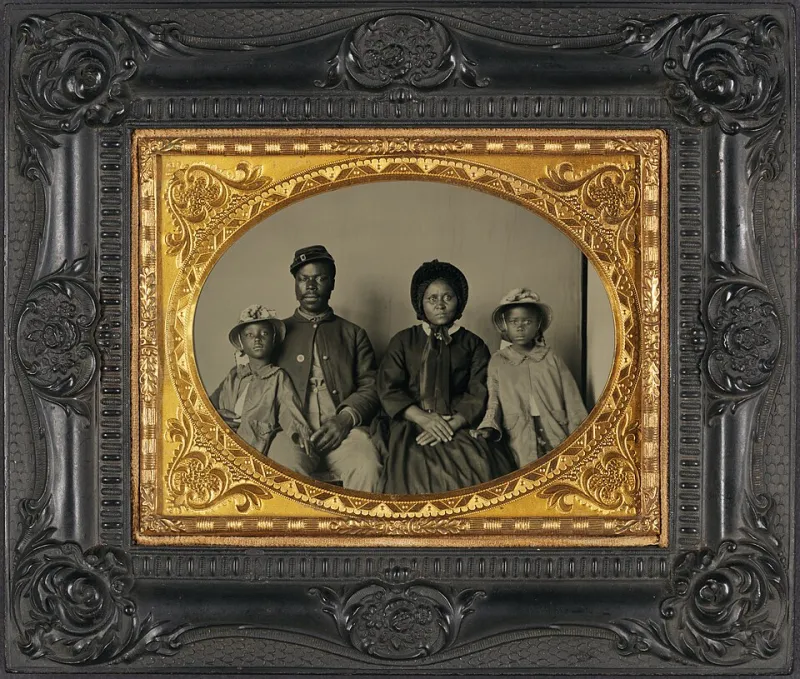
Photo: unattributed, Public domain, via Wikimedia Commons
You can spot them from the street: narrow storefronts with a curtain of plastic beads, a few framed samples sun-faded in the window, and a painted cloth backdrop rolled up like a theater curtain. In neighborhoods across Abidjan, from Yopougon to Treichville, these small photo studios are still in the business of making families look like they planned for the moment—because they did.
The backdrop might be a boulevard at dusk, a fabric shop stacked with wax prints, a garden that exists only in pigment, or a soft-focus living room with a sofa no one has ever sat on. The setting is fake. The occasion is not.
The Wall Is Part of the Family
A studio session here is rarely a solo thing. It is a cousin arriving from Paris, a baby's first birthday, a wedding court in matching lace, a graduation, a baptism, or a homecoming after years abroad. The family comes as a group, sometimes three generations deep, and the photographer arranges them like a small choir: tallest in back, smallest in front, hands on shoulders, chins up, nobody hiding behind anybody else.
The resulting print often ends up in the salon—the living room—above the television or beside the family altar of framed photos. Visitors do not have to ask who is who. The picture explains the family before anyone says a word. In a city where people move between neighborhoods and relatives scatter across countries, that wall does quiet work. It says: we were all in the same room once, and we dressed for it.
Getting Ready Is Half of the Event
The ritual starts before the studio. There is the debate over the pagne, the matching fabric bought at Adjamé or Treichville market. There is the ironing, the borrowed belt, the aunt who insists on a little lipstick, the uncle who complains about the tie and then wears it anyway. Someone is always late. Someone is always holding a sleeping baby. The photographer waits, because the photographer has seen this before.
In 2026, everyone in that room probably has a smartphone with a better camera than the studio's old DSLR. That does not cancel the appointment. A phone snap is for the group chat. The studio print is for the wall, for the grandparents, for the version of the family that gets to look composed for a minute. The dressing up matters because it turns an ordinary Sunday into a record. It is not about pretending to be rich. It is about showing up for each other in public, even if the public is just a canvas backdrop and a photographer's assistant holding a reflector.
The painted sets are part of the charm. A family can pose in front of a city skyline that never rains, or a market scene that never gets crowded, or a dreamy archway that suggests a wedding venue far beyond the budget. The backdrop is a shared joke and a shared aspiration at the same time. Nobody thinks the sofa is real. Everybody understands why it is there.
Why the Print Still Hangs
Abidjan's photo studios survive because they sell something a camera roll cannot: a finished object with a place in the home. A print can be touched. It can be given to a grandmother who does not scroll. It can be carried to a funeral or a wedding or a family meeting. It can be re-printed when a cousin asks for a copy. It can outlast the phone that took the last hundred pictures.
There is also the social contract of the sitting. For an hour, everyone agrees to be a family on purpose. The teenagers cooperate. The toddlers are bribed with snacks. The elders get the good chairs. The photographer tells everyone to look at the same spot, and for a second they do. That is not nothing in a city as busy and spread out as Abidjan.
The studios are not frozen in time, either. Some now shoot digital and print on site. Some offer edited versions with brighter skies. Some still use the same hand-painted cloth that has been patched and repainted for years. The mix is the point: old backdrop, new family, same reason.
What US Readers Can Borrow
If you grew up with a department-store portrait studio, a church directory photo, or a graduation shoot in a park, you know a cousin of this ritual. The US version might be a quinceañera portrait, a family reunion T-shirt, or the one nice photo everyone agrees to take before the potato salad comes out. The Abidjan version is more theatrical, but the instinct is familiar: mark the milestone, dress up, and make a picture that can be passed around.
The next time you scroll past a hundred phone photos of the same birthday party, think about the wall. Which image would your family actually print? Who would get a copy? What would you wear if you knew the picture was going to hang in the salon for the next ten years? Abidjan's family studios ask those questions every weekend, behind a painted backdrop, with everyone trying not to blink.