Seven Abidjan Street Eats That Belong Beside Your City's Tacos and Hot Dogs
Abidjan has a food-hall problem, and the problem is that most US cities don't have one of its stalls yet.
In 2026, American food halls can sell you tacos, ramen, pierogi, and a $19 grain bowl without blinking. But walk through Abidjan's streets—especially at night, when the grills fire up and the chili sauce starts moving—and you realize the city is sitting on a street-food catalog that deserves a boarding pass, a food crawl, or at least a permanent counter in your city.
This isn't a knock on jollof. Jollof is great. Jollof is the cousin who gets all the attention at the family reunion. But Abidjan's street eats are the rest of the family: loud, generous, a little chaotic, and impossible to forget. Here are seven to put on your radar.
1. Attiéké: The Cassava Couscous That Puts Your Grain Bowl on Notice
Attiéké is made from fermented cassava, steamed into fluffy little grains, and served with pretty much everything. On its own, it's tangy and light. With grilled fish, tomatoes, onions, and a hit of chili, it becomes the kind of plate you keep eating long after you said you were full.
Think of it as the love child of couscous and a tangy slaw—except it has more personality than most of the grain bowls lining your lunch rush. In the US, you'll find it at West African restaurants and markets; ask for attiéké poisson and thank us later. If a food hall near you is smart, it will eventually sell it as a build-your-own bowl. Until then, it's a bucket-list bite.
2. Alloco: Fried Plantains With Main-Character Energy
Alloco is ripe plantain, fried until the edges caramelize and the middle goes soft. It's a street snack, a side dish, and a late-night decision all at once. In Abidjan, it often comes with a spicy onion-and-tomato sauce that cuts through the sweetness.
If you like maduros, sweet potato fries, or banana chips, this is your lane. But alloco has a texture all its own: crisp at the edges, tender inside, and built for sharing—though you won't want to. It's the kind of food that makes a paper plate feel like a formal setting.
3. Garba: Abidjan's Late-Night Answer to a Tuna Melt
Garba is not a dance in this context. It's a street plate of attiéké topped with fried tuna, tomatoes, onions, and chili. It's cheap, fast, and everywhere after dark. Imagine a tuna melt, a fish sandwich, and a rice bowl got together at 1 a.m. and decided to be more interesting than all three.
Garba is the move when you want something salty, tangy, and filling without a sit-down dinner. It's also a good entry point if you're new to Ivorian food: the flavors are bold but familiar, and the format is basically a bowl. US food halls love a bowl. This one just happens to have a better backstory.
4. Brochettes: Skewers That Do What Kebabs Do, Louder
Grilled meat skewers show up across West Africa, and Abidjan does them with serious street-corner confidence. Beef or chicken gets rubbed with spice, hit with smoke, and served with onions and a fiery condiment. You eat them standing up, usually while talking with your hands.
Compared with the average US food-truck kebab, brochettes tend to be punchier and less polite. They're a reminder that street food doesn't need a fancy sauce drizzle to be memorable. If your city has a West African grill night, this is the order that makes the table go quiet for a second.
5. Poisson Braisé: Grilled Fish That Makes a Backyard Cookout Look Timid
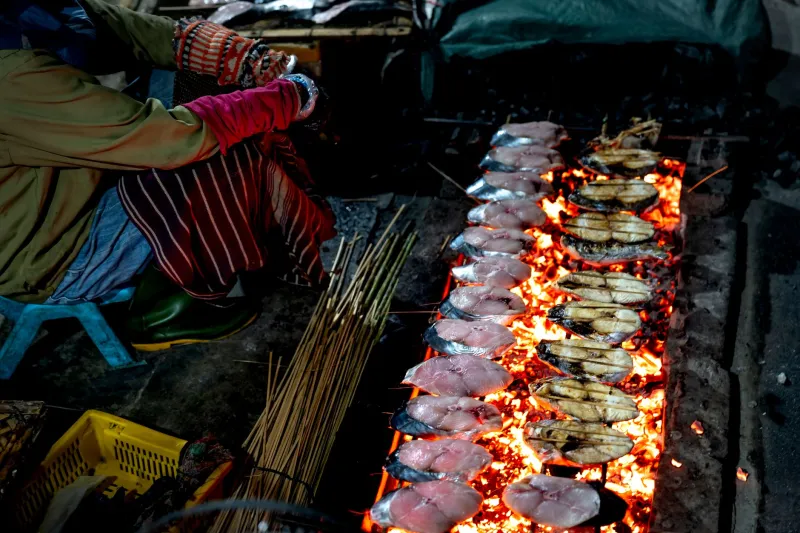
Whole grilled fish is a centerpiece in Abidjan. It's scored, stuffed or rubbed with herbs and chili, then grilled until the skin crisps and the meat stays juicy. It comes with attiéké, alloco, or both, plus tomatoes and onions. You eat it with your hands, and you accept that you will need extra napkins.
In the US, we like to act like a backyard cookout is the peak of outdoor eating. Then you meet poisson braisé and realize the bar was lower than you thought. It's the kind of dish that would crush at a summer food festival—if the festival organizers knew what to ask for.
6. Bissap: The Hibiscus Cooler Your Lemonade Stand Has Been Missing
Bissap is a chilled hibiscus drink, deep red and tart, often sweetened and sometimes flavored with mint or ginger. It's sold on street corners and served at parties, and it does the one thing every great summer drink should do: it makes you want another one immediately.
Think cranberry juice meets lemonade, with a floral edge and no corporate focus-group energy. In 2026, US drink menus are already flirting with hibiscus in cocktails and sodas, so bissap isn't a hard sell. It's just waiting for someone to put it in a can and stop overthinking it.
7. Dégué: The Millet-and-Yogurt Cup That Beats Your Overpriced Parfait
Dégué is a sweet street treat made with millet couscous, yogurt, and sometimes condensed milk or vanilla. It's creamy, slightly chewy, and cold enough to feel like dessert and a drink at the same time. Vendors sell it in cups, which means it's already packaged for the US food-hall crowd.
If you've ever paid too much for a parfait that was mostly granola dust, dégué is your revenge. It's simpler, more interesting, and it has a texture that keeps you coming back. It also proves that Abidjan's street food isn't just about heat and smoke; there's a whole sweet side waiting to be discovered.
How to Find It Without a Plane Ticket
Start with West African restaurants and grocery stores in your city. Ask for attiéké, alloco, and bissap by name. If there's an Ivorian spot nearby, even better. If there isn't, look for a West African pop-up or a diaspora food festival—they're often the fastest way to taste the real thing.
And if you're planning a trip to Abidjan, build a street-food crawl around the evening hours, when the grills and vendor stalls hit their stride. Bring cash, bring an appetite, and don't be shy about asking what's good. The city will answer.
Abidjan doesn't need a PR firm to make its case. It needs a stall, a line, and a few curious eaters. Your city's food hall can keep the tacos. It just needs to make room for attiéké.